 Claudia Moscovici
Denis Diderot was known in his lifetime primarily for being the editor of the Encyclopédie. He is perhaps equally known in our times for his art criticism, which elegantly unites a philosophical preoccupation with understanding the nature of beauty with a defense of art that elevates the mind, not just the senses. In describing aesthetic appreciation largely in terms of processed, lucid emotions, Diderot can be regarded as one of the important precursors to Romanticism.
Romanticism is best known, however, as a response to and reaction against the constraints of Neoclassical aesthetics. In the chapter devoted to Wordsworth’s and Baudelaire’s aesthetics, we will see how Romanticism gives the writer or artist an entirely new role. He is no longer an imitator or reflector of a world created by divinity, but a creator of a fragile and contingent meaning and beauty for an increasingly secular world. This secular world was not easy to endow with significance. For without appealing to a higher standard, where would this meaning come from? The imperfection of the world and of human beings is not a reassuring source, which is why Romanticism is equally known for its expression of melancholia and even despair. Le mal du siècle—the sense of spiritual longing coupled with the shiftless sense of the meaninglessness—was given voice in French literature by Chateaubriand, Novalis and Constant, and found poetic expression in the poetry of Lamartine and Hugo.
In underscoring the importance and psychological and emotional complexity of the individual, Romanticism also makes religious and cosmological claims about the relation between the self and the rest of the universe. If Neoclassicism represented man in relation to the divine—as God’s creation and in some respects mirror image—Romanticism, regardless of the religious beliefs of its authors, completed the revolution that placed man at the center of the world. Yet Romanticism’s tension, interest and even tragedy lie in its struggle to embody in fallible and mortal human beings the values and sense of higher meaning formerly attributed to the divine. In Natural Supernaturalism (New York, 1971), M. H. Abrams expresses with elegance this double nature of the Romantic writer and poet:
Much of what distinguishes writers I call ‘Romantic’ derives from the fact that they undertook, whatever their religious creed or lack of creed, to save traditional concepts, schemes and values which had been based on the relation of the Creator to his creature and creation, but to reformulate them within the prevailing two-term system of subject and object, ego and non-ego, the human mind or consciousness and its transactions with nature. Despite their displacement from a supernatural to a natural frame of reference, however, the ancient problems, terminology, and ways of thinking about human nature and history survived, as the implicit distinctions and categories through which even radically secular writers saw themselves and their world, and as the presuppositions of forms of their thinking about the condition, the milieu, the essential values and aspirations, and the history and destiny of the individual and of mankind. (Natural Supernaturalism, 13)
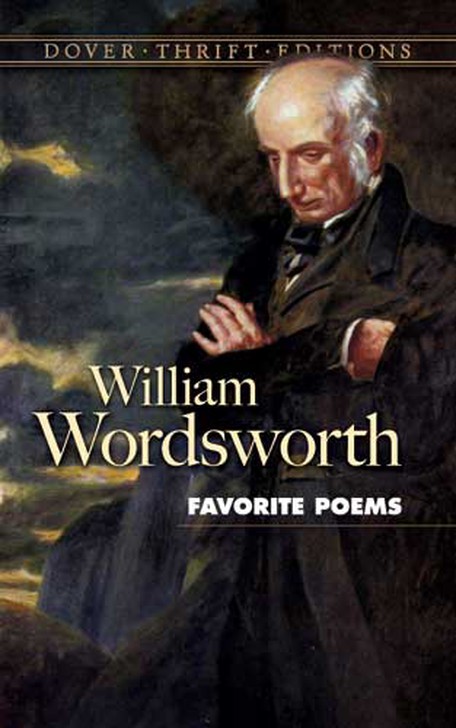
As we will see in our reading of Wordsworth’s Preface to the Lyrical Ballads in relation to Baudelaire’s Salons, when art no longer serves the purpose of representing a world created by God and of transmitting its meaning to others, the artist takes on a double nature. On the one hand, he’s a created, fragile being in a world which appears to be forsaken by the divine. On the other hand, he’s a creator of extraordinary beauty and meaning. The Romantic artist is therefore both infinitely small and infinitely powerful; a finitude aspiring to the infinite.
While Wordsworth expresses hope about the creative powers of the artist, Baudelaire’s Romanticism is marked by nostalgia and loss of faith. Yet in his Salons the poet also expresses a longing for capturing an element of the abstraction we call beauty and of the hope we call meaning. Carrying us to the threshold of his favorite concept—modernity—Baudelaire traces the boundaries of the artist’s double nature, as lost in a world without certainties and at the same time seeking to capture the fugitive beauty of that world through poetry, art and literature.
https://rowman.com/ISBN/9780739116753/Romanticism-and-Postromanticism
(sursa foto: glose.com)


