 Claudia Moscovici
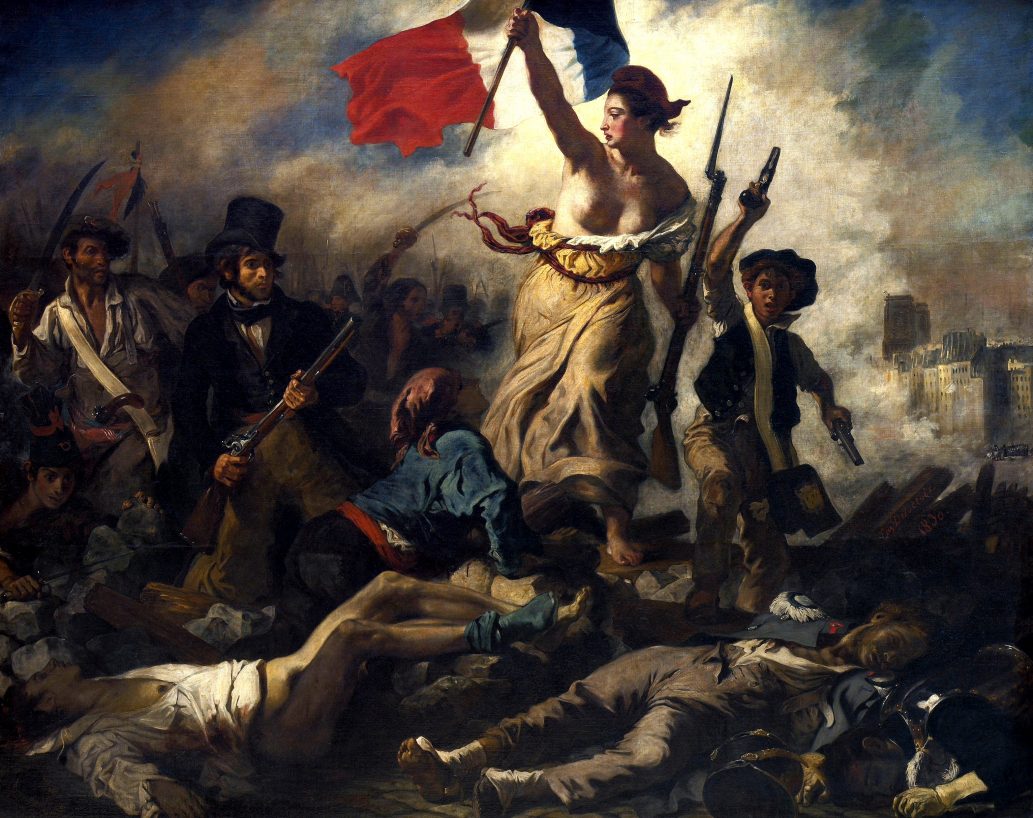
In his study of Romanticism, The Mirror and the Lamp, M. H. Abrams distinguishes between a theory and an orientation. A theory begins with a set of assumptions that lead to a conclusion that follows logically from them. Romanticism lacks the internal consistency and rational structure of a theory. Nonetheless, the writing of the Romantics points to related ways of conveying human emotion. As Abrams explains referring to Wordsworth in particular, for the Romantics, “A work of art is essentially the internal made external, resulting from a creative process operating under the impulse of feeling, and embodying the combined product of the poet’s perceptions, thoughts, and feelings” (22).
Clearly, Romanticism is not the expression of raw, subconscious impulses, as the Surrealists would later describe the automatism of their own art. If Abrams states that expressive Romantic theories comprise an orientation, it’s because they present different ways of processing emotions thoughtfully for artistic ends. As literary critics point out, the role of emotions differs vastly from author to author. Romantic texts engage intellectual history, leading us to wonder: Is emotion visceral and uncontrollable, as so many thinkers, from Plato to Kant, had maintained? Is it related in some fundamental way to what we know about the world, as the Stoics postulated? Is it tied to our ethical beliefs and tendencies, as Hume and Rousseau claimed in their defenses of sympathy? Is it induced by art, as Wordsworth and Baudelaire would declare? The difference in assumptions about emotion and its role in artistic creation contributes to the richness and versatility of Romantic literature and of the expressive models of art that underpin it.
Romantic literature links emotion to art in ways that engage the big questions of almost every field of what we now call the humanities and social sciences, relating art to psychology, political theory and nearly every branch of philosophy. Given the diversity and wide-ranging intellectual implications of Romanticism, it’s difficult to limit it even to the boundaries of an orientation. Yet the question remains unavoidable, so let’s return to it: in what ways can we speak meaningfully of a Romantic orientation? Like Abrams, I believe that there is one, indeed. I think we’re in a better position to understand Romanticism by looking at its philosophical underpinnings and seeing how radically it has transformed the way we look at emotion in general and at passion in particular. Romanticism was the most significant movement in Western culture to render passion and its artistic expression not an object of fear or ambivalence, but a highly desirable quality; one which is indispensable to human happiness.
In Upheavals of Thought, Martha Nussbaum traces the most prominent philosophical arguments for and against emotion. The con side tends to win over the pro side. Nussbaum shows that even those philosophers who were generally sympathetic to the emotions—including Aristotle, the Stoics, Smith and Rousseau—warned against their uncontrollable nature and the danger they posed to reason (in the pursuit of knowledge) and to ethics (in the pursuit of the good life). Rousseau and Hume make some apologies for emotion in their study of sympathy, but even they exercise caution and qualify extensively.
Nussbaum considers in particular the Kantian argument against the emotions, which was very influential during the Enlightenment and which the Romantics had to contend with. Kant argues that emotions are too subjective, unreliable and volatile to provide an adequate basis for moral conduct. To address this objection, Nussbaum breaks it down into its component parts. First, such an argument tells us that emotions can be dangerous because they focus upon the individual and his or her personal goals or projects rather than the good of humanity. Second, the argument goes, emotions are associated with extremely close and intense attachments that may be “too partial or unbalanced” to lead to ethical decisions. (12) Third, it’s objected that even those emotions that we consider positive—such as love or compassion—are often inseparable from destructive emotions, such as jealousy, anger and hatred. Although Kant stated this argument most compellingly, many philosophers that Nussbaum examines in her book—including Plato, Aristotle, the Stoics, Descartes, Smith, Rousseau, and Kant himself—attempt to prove in one way or another that emotions are uncontrollable and destructive impulses (much of the same order as our bodily drives) that are unreliable motivations for morality. (13)
To detach emotion from the ethical standards and rationalist assumptions that were so inhospitable to it, Romantic authors first aestheticized it. Emotion, they illustrate, is above all related to the way we create and appreciate art. It’s not, as philosophers tended to argue, primarily related to how we regulate ourselves or respond ethically to other human beings. Most Romantics did not go so far as to say that art could never be judged by moral criteria. Even when the late-Romantic theory of art for art’s sake become all the rage in France in the 1830’s, art was not regarded as immune to moral judgment. Nonetheless, the Romantics made it possible for us to see emotion as tied to creativity and meaning in a way that rendered moral responses secondary to aesthetic ones. Once they made this important shift in the link between art and ethical value, the Romantics could reconnect emotion to all other important human faculties (cognition, perception and rational thought) in new, refreshing and complex ways. Under their pens, emotion—and passion in particular—became the center of human existence, its most exalted state and a conduit to beauty and meaning.
To transform so radically the enduring conceptions of emotion that had dominated intellectual history for millennia was, to say the least, an impressive feat. For anyone sympathetic to the values and heritage of Romanticism, trying to understand how this radical transformation might have occurred and how it continues to influence us today presents an irresistible temptation. It’s also a very ambitious undertaking, which is why the study of Romanticism has been parceled out by different scholars according to their diverse areas of specialization and interest. This book is no exception to such a division of labor. My area of specialization leads me to focus primarily on the French Romantics, both early and late ones: Rousseau, Staël and Baudelaire. Nonetheless, their writing is sufficiently cosmopolitan—since, after all, Mme de Staël introduced Kant and German Romanticism to the French and Baudelaire did the same for Edgar Allen Poe—to touch upon other currents of Romanticism. The choice of these authors is also partly motivated by my interest in philosophy, which leads me to look at those French Romantics whose influential writing lends itself most readily to an analysis of Romanticism’s wide-ranging philosophical implications.
The main point of this book, however, is to show how the aesthetic richness of our Romantic past shapes art and culture today. Although Romanticism and Postromanticism will present my own vision of postromanticism, as the title implies, this vision will be based upon an extrapolation of the forms of Romantic expression and thought that I consider especially representative of their times and relevant to ours. Measured by this broad standard, the choices of Romantic texts are numerous, even taking into consideration my primary focus upon French culture. Thus the selection of Rousseau, Diderot, Staël and Baudelaire as the key figures of French Romanticism whose works I will discuss may seem as arbitrary as choosing the finalists of a Ms. America pageant. I can, however, offer some justification for this selection. I have chosen these three figures in part because they represent different phases of Romanticism—early, middle and late. More importantly, in my estimation, these authors show most compellingly how passion—which is the crux of Romantic thought—relates to aesthetics, ethics and epistemology. In other words, each author I selected explores a different and complementary philosophical facet of Romanticism.
I will discuss Rousseau’s La Nouvelle Héloïse first not only because it’s one of the most influential and earliest examples of Romanticism, but also because it thinks through in an unparalleled fashion the role of personal feelings in the modern public sphere. Rousseau probes the relation between ethics and passion, showing both their intersection and their tension. He provokes us to think about how private emotions play an important role in a broader social context.
Much as Rousseau’s Romantic focus is ethics or virtue, Madame de Staël unveils the epistemological dimensions of passion. In De l’Allemagne she raises the important question: how do emotive and seemingly non-rational forms of knowledge enable us to become more attuned to the world and to others? What role does emotion play in knowledge? In light of the modern and postmodern critiques of the limitations of rational and empirical forms of knowledge, Staël’s reflections on enthusiasm and passion deserve our attention.
Diderot is not a Romantic—and in fact his versatile style exceeds the boundaries of any categorization. Nonetheless, his reflections on beauty in the Traité du beau and his art criticism of in the Salons, in their elevation of passion and pathos, helped lay the aesthetic foundation for both Neoclassicism and Romanticism.
The second part of the book addresses the following question: How did an artistic movement whose focus was emotive expression change into a quest for formal experimentation? The French novelists and art critics Théophile Gautier and Emile Zola and the painter Eduard Manet played an instrumental role in this transition. Although this places a lot of weight upon the shoulders of a few individuals, we can’t underestimate the French influence in the radical transformation of modern art during the late nineteenth-century. At this moment in time, Paris became the international center of artistic innovation; in the fifty years after Impressionism, art changed at a faster rate than during the four hundred years that preceded it. I trace how the Romantic and Realist features of art gradually gave in to the pressure for art to be individual and original during the Impressionist and post-Impressionist movements.
In the third part of the book, I present the philosophy of postromanticism by thinking through how the Romantic emphasis upon beauty and passion can be combined with the modern and postmodern emphasis upon originality and experimentation. I also use examples from contemporary art to illustrate this aesthetics. The sketch of postromanticism which I offer is, needless to say, only a beginning. I do not discuss how Romantic ideals are still manifested in all branches of creativity—which would be a massive undertaking—but rather how they are evident in the postromantic movement that I’m personally involved with.
https://rowman.com/ISBN/9780739116753/Romanticism-and-Postromanticism


