 Claudia Moscovici
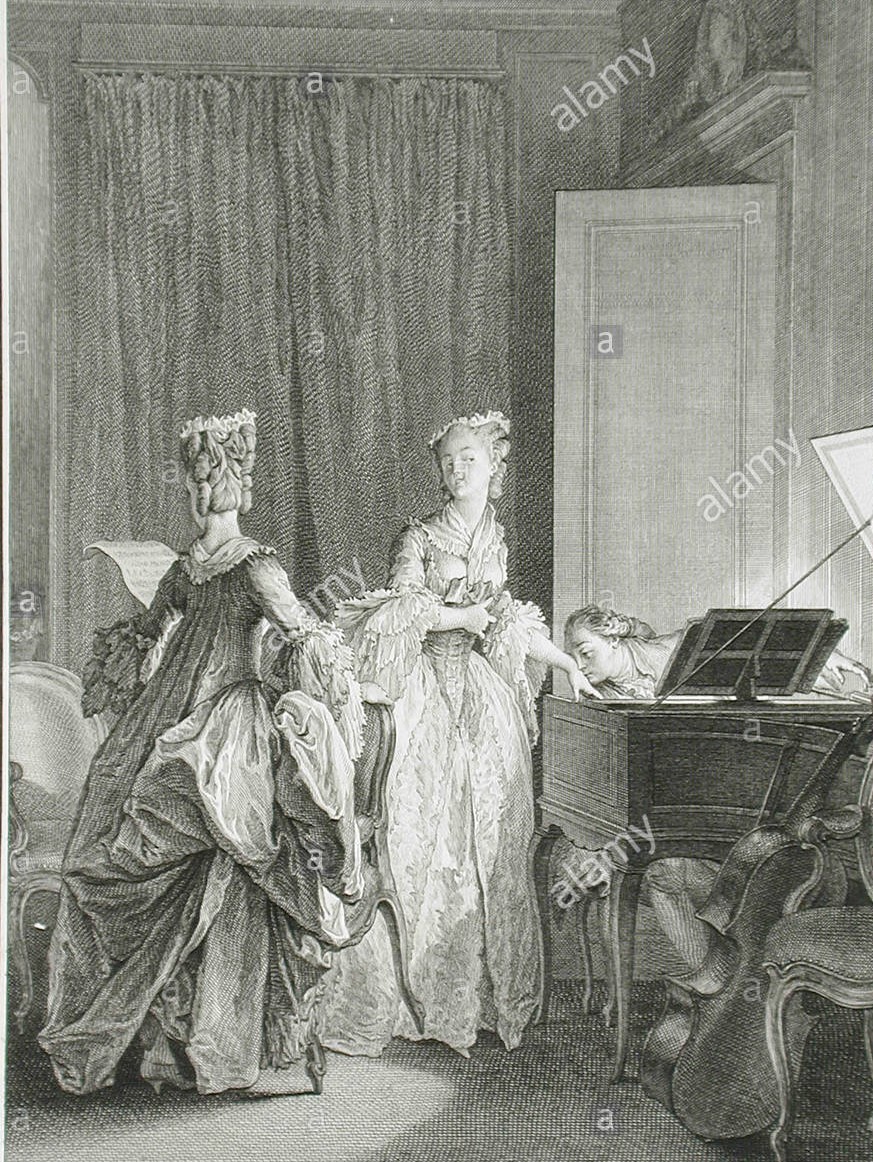
Rousseau wrote La Nouvelle Héloïse at Monmorency. This novel was in part inspired by his love for Sophie d’Houdetot, who was in turn in love with the poet St.-Lambert. Published in 1761, La Nouvelle Héloïse became an instant bestseller. Expressive, poignant and emotive, the novel had special appeal for its readers as many of them thought it was not a work of fiction, but the exchange of real love letters. Once literary expression could be linked to authenticity of feeling, the gap between reality and representation appeared to diminish, if not altogether disappear. The scene is set on the shores of Lake Geneva, but the plot harks back in time to the relationship between Peter Abelard and his pupil and mistress, Heloise.
As in the medieval relationship, the heroine, Julie, the daughter of the Baron d’Etange, falls in love with her middle-class tutor, Saint-Preux. Since Julie’s father hopes to find a suitable aristocratic match for his daughter, he strongly opposes her marriage to the tutor. Upset by the tension in her family, Julie’s mother dies of sorrow. Although Saint-Preux is obliged to leave Julie and travels around the world, the lovers remain closely in touch through their letters. When he returns, Julie is already married to Wolmar, an aristocrat who nonetheless seems to represent Rousseau’s middle-class ideals of masculinity. Frugal, virtuous, practical and rational, the husband complements the wife’s sensitive and emotive femininity. The tutor eventually joins the couple and their family without reigniting his affair with Julie and thus violating their sense of honor. Yet the fragile equilibrium among the three friends breaks once Julie sacrifices her life to save a child from drowning.
Significantly, one of Saint-Preux’s first gestures is to establish both rhetorically and sentimentally the modernity of his relationship to Julie by distinguishing himself from Abelard. As is well known, Peter Abelard (1079-1142), one of the foremost logicians and philosophers of his times. He’s arguably even more famous, however, because of his tumultuous personal life: most notably, the fact that he fell in love, had a child with and secretly married Heloise, the aristocratic girl he tutored. To punish Abelard for dishonoring his niece, Heloise’s uncle hired a group of thugs to attack and castrate the young man. Both Abelard and Heloise subsequently retreated into monasteries. Following their separation, Abelard did not show the same intensity and loyalty of feelings to Heloise that she maintained for him and that Saint-Preux wishes to show his beloved. The difference between medieval and modern romance, Rousseau suggests, lies not so much in the behavior of the woman as in that of the man.
As Saint-Preux writes to Julie just after their first kiss and overt avowals of love, “I’ve always felt sorry for Héloïse; she had a heart made for love; but Abélard never seemed anything but a sad man who deserved his fate, since he knew as little about love as about virtue” (Première partie, Lettre XXIV, Flammarion, 61, my translation). Embittered by his punishment and true to the religious values of his times, Abelard proved incapable of perceiving erotic love as at the same time sublime and transcendental. He ultimately chose the love of God over passion for his beloved. Saint-Preux wishes to do the opposite. He gives voice to the early Romantic conception of human love as (at least in part) transcendental.
For him, Romantic love entails the elevation in esteem of a human being who comes to represent ideal moral and aesthetic qualities: beauty, virtue, goodness. These qualities had been associated with the divine by previous models of love, including the Platonic and the Christian, which, as Martha Nussbaum points out in Upheavals of Thought, had represented love as an ascending ladder from the contingent (or ephemeral, accidental and carnal desire) to the transcendental (or everlasting feelings motivated by universal or religious values). Yet, one may ask, why the need to attribute transcendental value to earthly love? And how is this possible to achieve when speaking of relationships between contingent, vulnerable and imperfect human beings? These questions lie at the center of a novel that represents the tension between the fragility of human life and feelings and the search for absolute meaning—a tension that would become the chief characteristic of Romantic literature, art and philosophy.
https://rowman.com/ISBN/9780739116753/Romanticism-and-Postromanticism
(sursa foto: alamy.com)


