 Carmen Firan
Technology has brought many good things. It’s hard to imagine life now without smart phones. If you forget you left your phone at home, you’ll feel lost, alone and helpless. You may miss the most important call of your life, you won’t be abreast of what happens in the world, and you won’t know whether it will rain today. In addition, imagine not being able to snap a selfie and share it, instantly, on social media. Your followers will think you are dead.
Many misfortunes could result from the technology as well: cyber espionage, hacked governmental servers and bank accounts, identity theft of millions of consumers, and last but not least, the mass manipulation of news and a flood of false information. We live in an era of information, now paradoxically directed by false news, which can indoctrinate, influence elections, infest democracies with disinformation, spread conspiracy theories, and infuse lies with an aura of truth.
Under communism, demagogy and propaganda needed not only a source, but also channels of dissemination. That’s easy to do in a dictatorship. Mass media, completely controlled by those in power, functions as a loudspeaker for propaganda. Apparently, the Secret police inspired by the Soviet Union, was responsible for generating rumors and disinformation, thus enhancing the machinery of propaganda.
But then, in today’s democratic societies, who would use the art of disinformation and why? For the same reason: create confusion, mistrust in institutions, create suspicion and a sense of vulnerability. Add a touch of fear, the refugee crisis and terrorism into the mix. Power builds its authority on such fears, portraying itself as the savior. Manipulation, populism, and demagogy are given a green light. “Speak truth to power” becomes “Tell the masses what they want to hear.” Manipulation through disinformation works as mass-hypnosis, providing many with the sensational conspiracy theories they desire. Lies are the most convenient truth. Nonetheless, for a lie to be assumed true, the individual must want it. Clever political leaders, convincing orators with a firm understanding of their audiences, know how to use just the right words at the right time. Often it is not the truth for which people wait, however uneasy or provoking it may be; rather they want to hear their own wishes and thoughts spoken by their leader, someone who has made it, a powerful model of success with whom they can identify.
It’s no surprise Trump won the presidential election. He spoke off the cuff, promising absolutely everything his followers could ask for. “Trump is one of us, speaks like us, thinks like us; we can see ourselves in him,” his supporters said. It’s as if he were a magician pulling doves from a hat, one after another after another, filling a void, a need for miracle. David Copperfield made the Statue of Liberty disappear for thousands of people; for a few seconds it was gone! The audience knew that just couldn’t really happen, but they believed that it did. When you witness a miracle, you don’t ask questions but simply accept it. Trump promised that he would solve domestic and international problems right away, without much help. The root of all problems was simple: Obama. The solution was, therefore, simple, too: restore American grandeur and supremacy by reversing all the political decisions of the previous administration. He didn’t mention the ‘how’ part, or what exactly would replace the void created by suppressing laws and treaties, but fans didn’t need to hear that; they trusted the magician’s cape and powers, remembering that he was a successful billionaire who proved he could make it big time, for himself at least. Moreover, he sold himself so well! He might be the ultimate American commercial!
Nonetheless, he wouldn’t have made it on his own. His biggest ally was the mass-media with all its ramifications. Ironically, detested by Trump because it didn’t praise him enough, the media is what turned him from being a controversial candidate into a winner. All TV channels, have one and only deity, beyond any political color: the Audience. While the audience isn’t always prestigious, it does bring money, and Money is America’s God. That’s where the media and Trump helped each other: Trump increased the media’s audience. For about a year, he was present on all channels. Day and night. It didn’t matter if he was critiqued or praised: he was present. That is what mattered. If you turned off the sound on your, you would still be overwhelmed by his face. Suppose there is a continuous Coke commercial, and all that you see is a bottle of Coke. Wouldn’t you be led to buy it, after all? Even if just out of curiosity, even if you didn’t like Coke, even if you felt it might be bad for you?
During the campaign, television enjoyed Trump’s one-man show. Mid-western Americans have their own TV channels, alongside the conservative Fox News, local right-wing channels, alternative newspapers and radio stations eulogizing white supremacy and, sometimes, even broadcasting fake news, intentionally produced to please their audiences. To these can be added countless websites overflowing with conspiracy theories, lugubrious slanders of democrat leaders, and triumphal praise for conservator favorites. Trump’s populist discourse energized significant groups, in turn encouraging the growth of Internet mystifications. On the other hand, it is not surprising that someone like Edward Snowden was capable of intervening in political life; cyber networks were vulnerable to hacking, and investigative journalism disappeared. Wars are fought on computer screens rather than on battle fields. When the CIA reported that WikiLeaks and Russia were implicated in influencing the election in favor of Donald Trump, Putin’s cynical reply followed quickly: more fake news.
Conspiracy theories upstage everything when disinformation is in charge. Fake news hit its target. Who is behind the wave of rumors and disinformation? A Kremlin chess player is rubbing his hands, satisfied. Not only left-wing dictatorships in Europe used populism and propaganda. Goebbels was Hitler’s propaganda minister. He knew well how to spread fake news and used disinformation as a means of manipulation. Today the Western world is reinventing itself, orienting itself toward new political and economic alliances. Multiculturalism and globalization are beginning to look like experiments, weakened more and more, on the one hand, by the radicalization of fundamentalists societies in Turkey and Middle East and, on the other, by increasing nationalism in Europe and America. Diversity and tolerance are values with ever weaker voices in the struggle to balance the threat of international terrorism used to promote isolationism
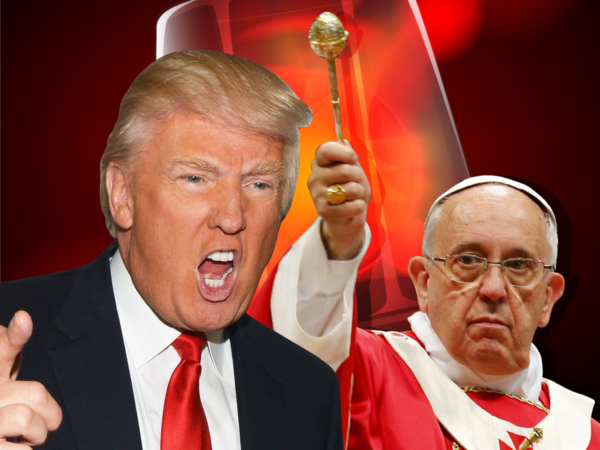
This phenomenon is so incredibly wide-spread and dangerous that Pope Francis has proclaimed fake news to be a sin.
(sursa foto: businessinsider.com)


