
 Claudia Moscovici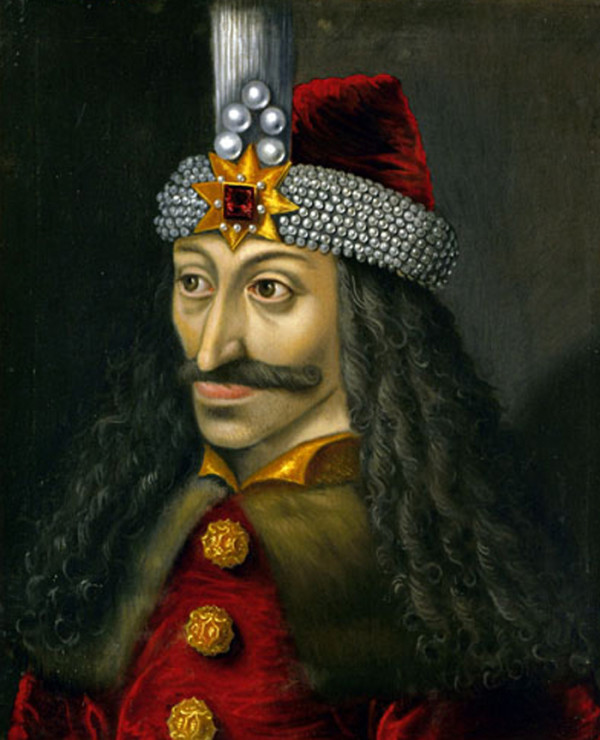
As a native Romanian who is also a novelist, I’m very intrigued and, frankly, somewhat baffled by America’s obsession with vampires and the Dracula legend.
Vampire novels and movies seem to keep growing in popularity, even as they’re spoofed by yet other vampire novels and movies. From what I can see, this trend doesn’t seem as popular in Europe. This leads me to wonder: why is America obsessed with vampires? I came up with five main reasons:
- Exoticism. The original Dracula legend is set in a country whose history and traditions are foreign to most American readers, who find Romania distant and exotic. By way of contrast, to most Europeans, Romania is relatively familiar. It’s a place plagued by its devastating totalitarian history (first the rule of the Iron Guard, then its lengthy communist period). It’s a place struggling to emerge from its dark past, faced with enormous economic and political challenges. To the French, at least, it’s also a place known for immigrants from both sides of the social spectrum: the gypsy exodus, which is often linked to pick-pocketing and a nomadic lifestyle, and some of the most intriguing European intellectuals and artists. But when you tell an American you’re from Romania, often the first thing they’ll think of is not Eugene Ionesco or Mircea Eliade orHerta Muller, but of Dracula.Vlad Tepes, also known as Vlad the Impaler (the ruler of Wallachia between 1456 and 1462) captivates readers with his notorious inhumanity. He’s infamous for the sadistic punishments he imposed upon his Turkish enemies as well as upon anyone who violated his laws. Legend has it that he’d enjoy his supper watching prisoners being impaled before his eyes. Which leads me to my second reason.
- The lure of evil. Vampires – these liminal beings between dark spirit and bad human – represent the dark powers over which we have only limited control. Evil seduces us, only to later destroy us. The vampire bite is closely associated with unbridled sexuality. Vampires, like social predators, suck the vitality or life blood of healthy human beings before moving on to the next victim. But then, I wondered, why don’t we read about them in their human form, such as the Scott Petersons of this world? Why do we prefer to view and read about them as our Others?
- Mediated evil. Human evil is inescapable. It’s everywhere around us. We read about it in the pages of history books and we see it on the news: ranging from the haunting memories of the Holocaust, to the Stalinist purges, to the latest serial killers on T.V. Because we’re exposed on a daily basis to the inhumanity of social predators, we’re not as intrigued by these deviants as we are by their un-human counterparts, the vampires. Familiarity breeds not contempt, but boredom. At the same time, evil in its human form makes people very uncomfortable. We don’t want to imagine that social predators could enter our neighborhoods, our houses and our lives, to harm us or our loved ones. Vampires give a more bearable expression to a sinister presence we already know. They enable us to contemplate evil while holding it at arm’s length.
- The widespread appeal of genre fiction. Compared to most Europeans, Americans have very little leisure time. Europeans get weeks, if not months, of vacation a year. Your average American gets only about two to three weeks. Although the distinction between literary fiction and genre fiction is not cut-and-dry, I’d say that genre fiction places emphasis upon a fast-moving, interesting plot, while literary fiction privileges psychologically nuanced characterizations and a unique style. Most vampire novels, though well-written, place most emphasis on plot. They’re perfect for readers who have little time and want to delve immediately into the action rather than being distracted by stylistic experiments or bogged down by a long-winded, Proustian style. Of course, there are some vampire novels that harmoniously blend several genres, to offer readers the best of all worlds. I’m thinking of Elizabeth Kostova’sThe Historian, which combines a beautiful style, historical erudition about the Dracula legend and a fast-paced, intriguing story.
- Education. My teenage daughter reminded me yesterday that she and her friends read theTwilightseries in fifth grade. This was their first exposure to narrative fiction that both adults and young adults enjoy reading. In Europe, on the other hand, the curriculum places emphasis (from a very young age) upon the literary canon. I remember being exposed to Tolstoy, Baudelaire and Flaubert early on, as opposed to reading either in school or for school the latest popular novels. While American students do sample the literary canon as well, that usually starts in junior high or high school. Even then, students are exposed mostly to the Anglo-American tradition. But, unlike most European students, they discover the pleasure of reading by delving into popular contemporary fiction right away. This sticks with them and most likely shapes their literary taste later in life as well.


