 Claudia Moscovici
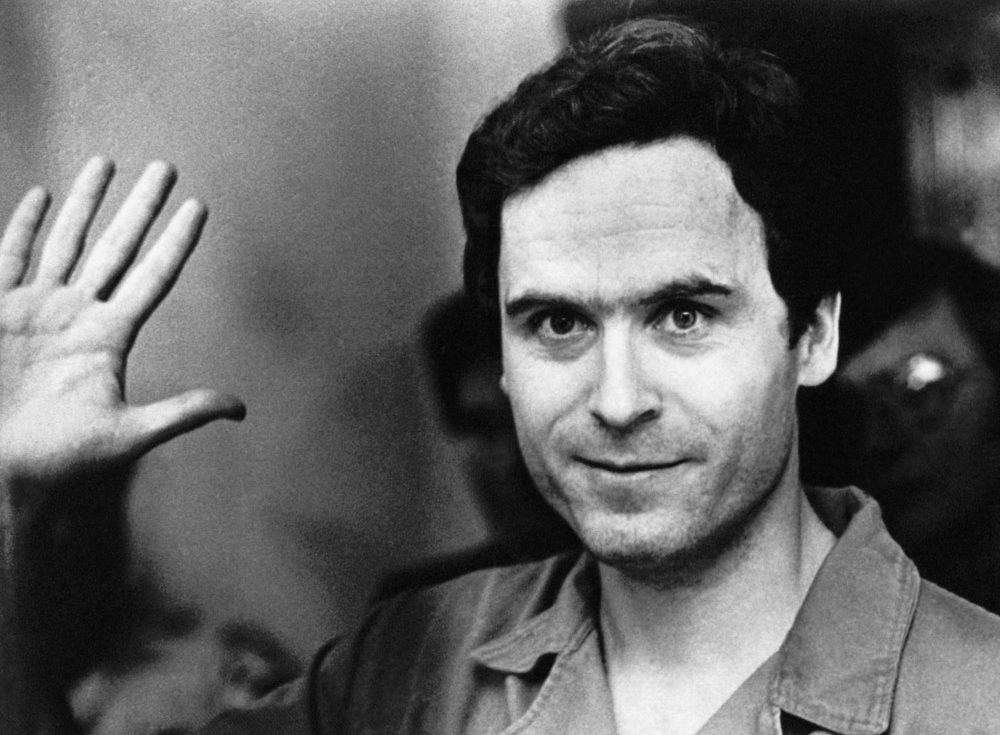
Unfortunately, their personality disorder often passes unnoticed until they commit a horrific crime. Some psychopaths, like Charles Manson, would appear crazy to a normal person even from miles away. In those cases, psychopathy is probably compounded by psychotic tendencies which render the disorder much more obvious to others. But most psychopaths move among us undetected. Scott Peterson, Mark Hacking and Neil Entwistle appeared to be normal young men even to those who thought they knew them best, such as their spouses, parents, in-laws and friends. In fact, in some respects, they seemed better than normal. According to their family members and friends, they could be exceptionally charming. Nothing in particular led them to kill their wives and babies. The media has ascribed traditional motives to their crimes, such as financial distress, girlfriends on the side and the desire for freedom or promiscuous sex. But these motives don’t even begin to explain the viciousness, gratuitousness and callousness of their acts. Perhaps one can understand, even if not condone, lack of empathy towards strangers. As history has shown time and time again, it may be easier, in certain circumstances, to dehumanize those one doesn’t know more intimately. But these men killed those who loved them most, trusted them fully and were closest to them. They murdered their innocent babies and wives who were either pregnant or had just given birth to their children. They didn’t become “crazy” all of a sudden due to a crisis. In some cases, marital squabbles or financial distress may have functioned as a catalyst. But the underlying personality disorder that enabled these men to commit such vicious crimes was present before, during and after the gruesome murders that rendered it visible to the public eye.
What distinguishes a psychopath who commits murder from one who doesn’t isn’t his conscience, since all psychopaths lack it. What makes the difference may be nothing more than his desires, opportunities, whims and short-term objectives. Most psychopaths choose to dispose of an inconvenient wife or girlfriend in the traditional manner. They divorce or break up with her. A few, like Scott Peterson, Mark Hacking and Neil Entwistle, decide that murder is the better route for them. Such men believe that they’re clever enough to fool the police and get away with their crimes. They commit murder to appear to be grieving spouses rather than risk being unmasked for what they really are even before the crimes: empty souls hiding behind a façade of lies. What a psychopath is capable of doing in order to protect his phony good image or to fulfill his deviant desires can’t be predicted in advance.
For normal people, it’s difficult to imagine such a disordered human being. To most of us, the psychopath represents a distant danger or an abstraction. It’s a concept we can comprehend intellectually, but not on an emotional level. Yet this is precisely what Martha Stout asks us to envision: “Imagine—if you can—not having a conscience, none at all, no feelings of guilt or remorse no matter what you do, no limiting sense of concern for the well-being of strangers, friends or even family members. Imagine no struggles with shame, not a single one in your whole life, no matter what kind of selfish, lazy, harmful, or immoral action you have taken…” (The Sociopath Next Door, 1). Her conclusion to this thought exercise is clear. Without a conscience, one can do anything at all. No evil act is beneath a psychopath. Once his crime is discovered, people tend to say that they never knew such evil existed. Unfortunately, it does. What’s worse, it’s common and well hidden enough to present a danger to us all.
Dangerous Liaisons/Legaturi Periculoase
Editura Vremea, http://www.edituravremea.ro/leg–turi-periculoase–cum-s–recuno–ti-un-psihopat–i-s–scapi-din-mrejele-lui


