 Claudia Moscovici
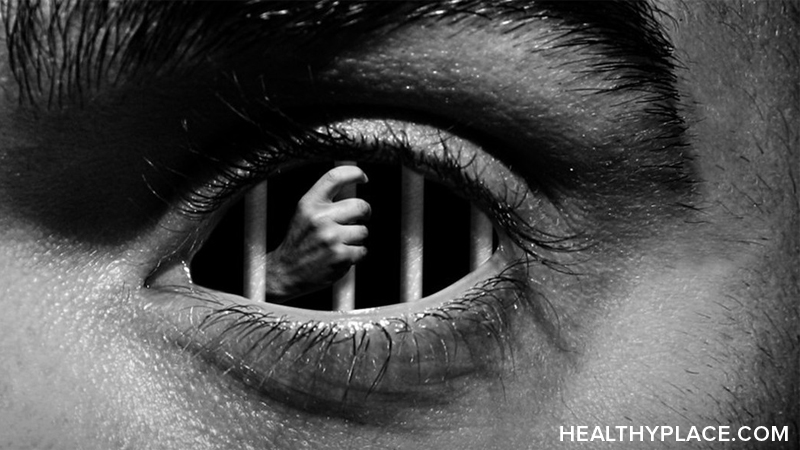
Resisting Family/External Pressure to Stay with the Psychopath
If you have a psychopathic husband, you’re likely to face not only internal pressure to stay in the relationship, but also external pressure, from your family, his family and your mutual friends. Psychopaths commonly use their family members and acquaintances as the support system that enables them to fool others (Women Who Love Psychopaths, 101-2). If your psychopathic partner relies upon such allies, it will take double strength to overcome both your own emotional investment and at the same time deal with all the external pressure to stay with him. Clearly, it’s in your best interest to resist both internal and external pressures to stay with a psychopath. I’ve already covered some of the internal pressures. Now I’ll address some of the external ones as well. In general, most of the external pressure stems from the fact that your family and friends may not comprehend that you’re dealing with a severely disordered individual who can’t be cured. It may take you, yourself, a long time to fully absorb this information. One can’t expect people who know him less than you do and who aren’t as well informed about psychopathy to realize just how dangerous he is. One might object that his own parents know him as well as you do. That’s generally not the case, however. They probably haven’t lived with him since he was a teenager. His parents know very well the child and adolescent psychopath. The main symptoms of his personality disorder, however, crystallized during adulthood.
Furthermore, it’s easy to mistake the early symptoms of psychopathy—the pranks, the deception, the insubordination to authority figures (such as teachers and parents) and the emotional immaturity—for normal adolescent development. Most teens manifest some antisocial traits, especially towards their parents, as they struggle to assert their independence. His parents may have noticed that their son was particularly insubordinate or deceitful as an adolescent. But it’s likely that they attributed his deviant behavior to other causes, perhaps even positive ones. They may have believed that the psychopath was brighter than other kids and misbehaved out of boredom. This generous explanation may have made some sense at the time. Psychopaths are, indeed, often smart and always easily bored. One should keep in mind, however, that a lot of kids are bright. Yet they still thrive in their academic, extracurricular and professional endeavors. They don’t all use their mental energies to deceive others and to undermine authority, as psychopathic children and adolescents tend to do. All this to say that his own parents do not, in fact, know the adult psychopath better than you. Consequently, they’re unlikely to realize what you’ve been going through in your relationship with him. In addition, his family members probably haven’t informed themselves about psychopathy. They may mistake his behavior—especially the cheating and the lying—as signs of “men will be men,” i.e., of moral errors that are quite common and often forgivable. They probably won’t grasp, just as it’s very difficult for you to accept, that you’ve been, essentially, living with the enemy. The person whom you loved most and who claimed to love you in return made it his top aim in life to psychologically destroy you.
I’ll offer an analogy to illustrate the underlying cruelty of psychopathic behavior. Imagine the following scenario: a boy who gets a puppy for Christmas. He pets him, feeds him, cuddles him, plays with him and even sleeps next to him at night. Then, six months later, after the puppy has bonded most with him and expects only nurture and affection from him, the boy takes a knife and slaughters him just for fun. That’s exactly what a psychopath does, at the very least on a psychological level, to every person who becomes intimately involved with him. He carefully nurtures expectations of mutual honesty and love. Then he sticks a knife into her back through a pattern of intentional deception and abuse.
Let me now offer a second, more poignant, example. I remember many years ago being horrified when I read in the news about the rapes of Bosnian women by ethnically Serbian men. What troubled me most was a true story about a Serbian soldier who “saved” a Bosnian girl from gang rape by fellow Serbs. He removed her from the dangerous situation, fed her, protected her and talked to her reassuringly and tenderly for several days. Once he secured her trust, gratitude and devotion, he raped and killed her himself. Afterwards, he boasted about his exploits on the international news. This degree of psychological sadism exceeds that of the brutes who raped and killed women without initially faking niceness and caring. What he did to her was more insidious, duplicitous and perverse. All psychopaths behave this way towards their partners, at the very least on an emotional level. They gain your love and trust only to take sadistic pleasure in harming you. Each time you forgive their behavior and take them back, they enjoy the thrill of having regained your confidence so that they can hurt you again. How can you possibly make your parents, his parents and your mutual friends—all those who have had contact primarily or exclusively with the charming side of the psychopath—understand that you’re dealing with such a deep and intrinsic level of perversion?
His parents are most likely to encourage you to stay with the psychopath because they probably care about him most. Once you inform them of his personality disorder, they may still hope that your love can help him improve. In fact, when he was a teenager, once they noticed some of the symptoms of his deviant behavior, they may have lavished a lot of attention and affection upon him. They may have done their best to encourage him to become a better and more empathetic person. Ironically, research shows that doting on a psychopath and being understanding and forgiving towards the symptoms of his malady—his impulsiveness, insensitivity, deceptiveness, manipulativeness, etc.—only reinforces them. The more you dote on a psychopath, the more you encourage him, admire him and treat him with compassion when he makes “mistakes,” the more you feed his core narcissism and hence also his malady. This is why if his parents believe that your love will help cure the psychopath, they’re definitely mistaken. Yet, as Liane Leedom documents, there’s some truth to the assumption that, generally speaking, a psychopath is better off inside a stable marriage rather than outside of it. The regular, more orderly structure of family life diminishes his opportunities for engaging in the kinds of excesses and transgressions he’s likely to pursue if left entirely to his own devices. Without any constraints and checks on his behavior, he may end up contracting a venereal disease, consumed by his addictions or in jail as a result of criminal activities. But keeping a psychopath out of trouble isn’t a good reason for you to forfeit your own happiness. As you know, you won’t be rewarded with any genuine love for your efforts and devotion. While it’s understandable that his parents’ priority might be to look out for their son, your top priority is to look out for yourself and your children, if you have any. Don’t worry about the psychopath. He will look out for number one. He always does.
You may belong to a religion or a religious sect that disapproves of divorce. Divorce for trivial or immoral reasons—such as having an affair or because you got bored with your current partner—is wrong. Marriage should be taken seriously. But only a dogmatic and irrational interpretation of ethics would demand that you remain married to a person who abuses you. It’s not your moral obligation to stay with a psychopath. Your moral obligation is to flourish as a human being and to stand by those who deserve and reciprocate your love. The psychopath doesn’t fall into this category.
You may experience the mixed blessing of having children with the psychopath. Bringing a child into this world can be one of the most rewarding and meaningful experiences in human life. But having a child or children with a psychopath carries with it great risk. Since antisocial traits are partly genetic, your child or children can inherit those negative characteristics. Moreover, as we’ve seen, a psychopath is incapable of loving anyone. He regards all people, including his children, as tools to get what he wants and as his personal possessions. Like you, they represent objects he will manipulate and control. Like you, they confirm his virility and personal power. As he got tired of you and of every other woman he played with, he will quickly tire of your child, his newest toy.
No change in circumstances can ever alter a psychopath’s underlying bad character for long. He is what he is and that’s what he’ll remain. Think back to the many second chances you’ve given him. Think back to all the times he shattered your hopes and abused your trust. You hoped that he’d change his cheating ways after you got engaged, but he didn’t. You then believed that he’d take your commitment more seriously once you married, but he didn’t. He just hid his perversions better and mastered the game of deceit. You hoped that a change of job or location would improve him, but it didn’t. Instead, your repeated concessions to his will and willingness to swallow increasing doses of mistreatment made him more confident that you’d take whatever abuse he dished out. He turned your life into a game that has no rational or moral rules.
You played along with his arbitrary power games. You played along because you love him and because you want to believe that he loves you as well: in his way, on some level, you feel compelled to qualify. Sure, he left you for other women and he will leave you again. But you interpret the fact that he returns to you time after time as evidence of his love. In other words, you engage in wishful thinking and reject the obvious reality. He doesn’t leave you because he loves anyone else more than you. Conversely, he doesn’t return to you because he realizes how much he loves you, after all. He comes and goes as he pleases to whoever lets him because he’s bored. Power over others fills his empty days. He’s like one of those magicians that spin plates on poles. He wants to see how many women he can spin around at once and for how long he can cultivate for each one the illusion of perpetual motion, or of real love. Each time a plate falls to the ground and shatters, he enjoys it. Each life he destroys represents a personal triumph for him. With you and every other woman in his life he plays this sordid game. There’s nothing inside of him that can love you or anybody else.
The same logic applies to having a child or children with him. If he cheated on you and wasn’t there to support you meaningfully during the emotional and physical challenges of pregnancy, he’ll remain equally unreliable and unsupportive as you raise your child. If he treated you with disrespect and even contempt before you had a child together, that’s how he’ll continue to treat you afterwards. If he shirked his professional and personal duties before, he won’t be able to handle the most important responsibility of all, which is raising a child. And if he abused you, he will abuse your child, at the very least emotionally. The Loser will remain a loser no matter whom he attaches to because his evil actions reflect his true identity. He deliberately hurts others not because they’re not right for him, as he claims to shift the blame, but because he’s not right for anybody else.
Consequently, if you have a child or children with a psychopath, it’s doubly important for you to protect not just yourself from his noxious influence, but also your children. Dr. Liane Leedom wrote a very informative book on this subject, called Just Like His Father? Her message is not purely cautionary, but also one of hope. She emphasizes that there’s no chance whatsoever of having a mutually loving and respectful relationship with a psychopath. But there’s a lot of hope for raising your child to be a healthy and empathetic individual who is not just like his father.
Your own family may pressure you to stay in such a destructive marriage. They may believe that the psychopath isn’t all that bad (if they’ve mostly seen his superficially charming side). They may tell you that divorce would make them look bad. Or they may believe that a wife should stand by her husband no matter what he does. None of these are valid reasons to stay with a psychopath. You shouldn’t destroy your life just to please others. Besides, if they truly care about you, your family members wouldn’t want you to be unhappy.
This calls to mind a scene from one of my favorite comedies, My Cousin Vinny. A young man who was wrongly accused of murder objects that his mother would be upset if he fired the so far incompetent Vinny, his cousin, and chose another, better attorney to defend him. His friend counters: “Wouldn’t your mother be more upset if you died?” The question is right on target and the answer is obvious. Once they come to understand the nature of his disorder, your family members would be far more upset if you continued to stay with a deranged man who makes it his life goal to make you miserable. In some ways, staying married to a psychopath constitutes a fate worse than death. It’s being condemned to life-long psychological torture by the very person who’s supposed to take care of you and love you most.
The Psychopath’s Parents: A Process of Mourning
In almost every society and culture, parents view their children as, in some respects, a reflection of themselves. They’re a biological reflection, since parents pass on some of their genetic qualities to their kids. They’re also a social and moral reflection. Children can make their parents proud or they can bring shame upon their family. Some parents, however, carry the fact that a child reflects back upon their image to extremes. On the one hand, some parents have so much narcissistic investment in their children that even when those children are convicted of the most horrific crimes—such as killing their spouses—they still defend them. I’m thinking here of Scott Peterson’s and Neil Entwistle’s parents. They continued to claim that their sons are innocent even when it was proven beyond reasonable doubt in court that they were guilty of murdering their wives and babies. In such cases, as mentioned earlier, the parents themselves are either disordered or blind. They refuse to see their sons as anything but the perfect beings they want them to be.
At the other end of the spectrum, some parents go so far as to kill their children if they reflect badly upon their values. I have in mind some fathers in fundamentalist cultures who kill their daughters if they have premarital sex or become pregnant out of wedlock. They do so as a punishment and to preserve their image as perfect parents who instilled the right values in their children. In other words, just as some parents are willing to sacrifice their moral values to preserve an idealized image of their children, others are willing to sacrifice their children to preserve an idealized image of their moral values. These two extreme cases constitute chiasmic inversions of each other. In the first case, the parents idealize their children at all cost. In the second, they idealize their values at all cost. Yet both sets of parents follow the same logic of seeing the children’s actions as a strict reflection of themselves.
Parents of psychopathic children are faced with the horns of the dilemma I’ve just sketched. Should they love their kids no matter what they do? Or should they reject them completely if their actions go against their own moral values? Unlike the fundamentalist fathers who sacrifice their daughters to their values, most parents feel that their love for their children is unconditional. At the same time, however, unlike Scott Peterson’s or Neil Entwistle’s parents, they would not go so far as to accept or ignore even the most atrocious behavior from their children. Most parents want their children to observe the ethical values they’ve inculcated in them. Yet they wouldn’t go so far as to sacrifice their children to those values. Most parents would therefore adopt a middle ground position between the two extreme cases I’ve described. But what does such a middle ground actually mean when your child turns out to be a psychopath?
Finding out that your child suffers from an unfixable emotional and moral deficiency can be even more devastating for the psychopath’s parents than it is for his spouse or partner. The wedding vows postulate staying together “for better or for worse.” However, “for worse” doesn’t include the psychological torture that psychopaths put their partners through. As we’ve seen, no partner is under the moral obligation to stay with a psychopath. Parents, on the other hand, face the social pressure, and perhaps even feel the natural inclination, to love their children no matter what. They’re the only beings likely to offer something as close to unconditional love as humanly possible. I don’t believe, however, that true unconditional love would be ethical or appropriate if your child makes it his life objective to harm others. If your parental love is truly unconditional, then you’re also condoning the psychopath’s immoral behavior towards others. In fact, parental love has to be conditional in some respects if the parents have any regard and compassion for the people whom the psychopath has hurt.
A psychopath’s parents will somehow have to psychologically adjust to the fact that the adorable baby, toddler and boy whom they raised is a different person from the grown man who takes great pleasure in deceiving, using and hurting others. In other words, like his partner, they’ll have to undergo a process of mourning. Those parents may always love the child they nurtured and raised. But they cannot, in good conscience, love in the same unconditional manner the bad person he’s become. They can’t endorse his immoral actions without violating their own principles and thus undermining their own humanity.
Many religions ask us to distinguish between a man’s actions and his identity: to love the man but disapprove of his evil deeds. Since a psychopath is the sum of his actions, however, because those evil actions reflect his real character, the parents of psychopaths can’t find much comfort in this theological distinction. If they wish to remain loving parents yet also maintain their integrity as individuals, they’re obliged to always love (and mourn) the child they lost while at the same time condemning the man he became.
Dangerous Liaisons/Legături Periculoase, Editura Vremea, http://www.edituravremea.ro/leg–turi-periculoase–cum-s–recuno–ti-un-psihopat–i-s–scapi-din-mrejele-lui
(sursa foto: quora.com)


