
 Claudia Moscovici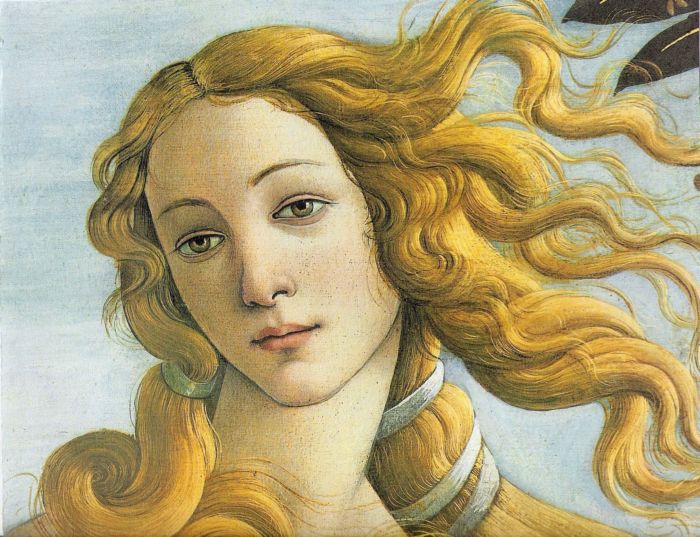
Like many scholars of my generation, I have lived through the “culture wars” in the arts and humanities, marked by the rise and critique of poststructuralist and postmodern theories. My personal view on these so-called “culture wars” is that life’s too short to focus on the negative. Why get bogged down in largely academic debates, when there’s so much of value in art and culture? Early on in my career as an art and literary critic, I made a conscious decision to concentrate on the aspects of art, literature and scholarship that I believe make major contributions to culture internationally. This is what the postromantic art movement, which I co-founded with Leonardo Pereznieto in 2002, is all about.
The inspiration I found in the writing of art historians/aesthetic theorists E. H. Gombrich and Arthur Danto kept me going along this positive and constructive path. In my opinion, their books set the highest standards in expository writing in the arts and humanities. Both of them felt equally comfortable writing for a large general audience as for a smaller group of specialists. In fact, they wrote different books for these different audiences. Though highly respected for their scholarship, both Gombrich and Danto are best known for explaining art history and aesthetics to the general public in a simple, clear and engaging manner. They abide by one of the most famous sayings attributed to Albert Einstein—“If you can’t explain it simply, you don’t understand it well enough”—which, I believe, should be a mantra for expository writing in the arts and letters (creative writing being, of course, another matter).
H. Gombrich and “The Story of Art”
Gombrich put into practice his belief that clarity, logical elegance and simplicity are the best ways to communicate ideas about the history of art. Although the author is appreciated among scholars for his later theoretical works, The Sense of Order (1979) and Art and Illusion (1960), which present a psychology of perception and explain the artistic process, his best-known and best-selling work is, by far, The Story of Art (1950). Originally intended as a high school textbook, the book is written so simply and clearly—and it reveals such a genuine appreciation of art–that it quickly became very popular with the general public. Translated into 39 languages, this introduction to art history has been a bestseller for over 50 years, selling over six million copies worldwide. “This is a book which may well affect the thought of a generation,” The Times Literary Supplement declared in 1950. This high praise turned out to be an understatement. The Story of Art has influenced many generations and, I predict, it will continue to do so.
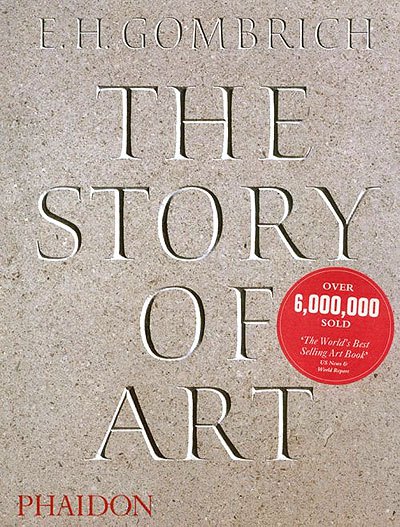
Aside from its clarity, simplicity and eloquence, this book explains cogently and persuasively how the artistic process works. It also introduces the most important artists and art movements of Western civilization. E. H. Gombrich declares from the start: “There really is no such thing as Art. There are only artists” (“The Story of Art,” New York and London, Phaidon Press, 15). By this the author means that art has no timeless standards of value or beauty.
There is no essence that encompasses that which different periods and cultures call artistic. Rather than trying to capture the essence of art, Gombrich focuses instead on the particularity of artistic movements and the accomplishments of individual artists. Which is not to say that he leaves aesthetics to the philosophers. His descriptions of artistic movements interweave the texture that holds groups of artists together under a dialogue of assumptions, perceptual problems they are working on, innovations, economic possibilities and modes of representation.
“Learn the rules like a pro so you can break them like an artist” Pablo Picasso
Although written for a general audience, and therefore in a much simpler more accessible style, The Story of Art is not worlds apart from his best-known scholarly book, Art and Illusion: A Study in the Psychology of Pictorial Representation. In both books, Gombrich describes the creative process from a psychological—and hence social–perspective. He contends that artistic creativity is never fully original. In fact, originality didn’t become important until the Renaissance and didn’t become the main artistic standard until the nineteenth century. But no matter what period we are considering, no artist reinvents the wheel, Gombrich contends. Each artist inherits artistic conventions (which he calls “schemata”) and selectively incorporates some of the techniques of established artists that came before him (or her).
This doesn’t mean, of course, that new art is a simple regurgitation of the past. Rather, the past—with its diverse styles and traditions—offers inspiration for new generations of artists. This leaves a lot of room for creativity. The best artists abide by Pablo Picasso’s famous quote, “Learn the rules like a pro so you can break them like an artist”.
According to Gombrich, artistic creativity consists of a trial and error process of experimenting with former techniques and inventions to create something fresh and new for your times. His main contribution, however, is that he manages to make even indifferent readers appreciate art. There’s no way to describe, without having the pleasure of reading The Story of Art, how Gombrich’s clear, simple and eloquent writing style captures readers’ attention and imagination, making us fall in love with art. This is any art historian’s greatest achievement.
(imagine cover: Nașterea lui Venus / detaliu, Sandro Boticelli; sursa foto: picturicelebre.ro)


