
 Claudia Moscovici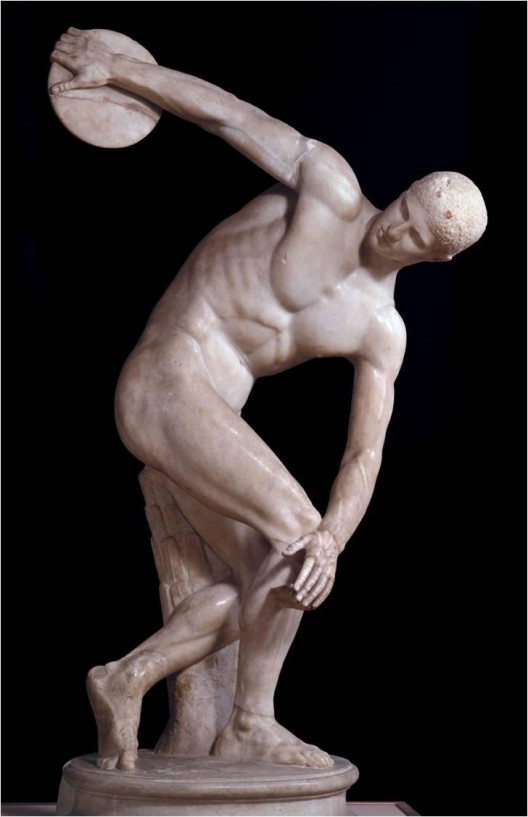
– from the Classical Period to the Hellenistic Age –
We tend to associate art and emotion. The Romantic notion of art as the product of an emotive, sensitive and inspired artist who creates masterpieces to move the public has not altogether disappeared from the popular imagination. Yet, in recent history—particularly since the movement of art for art’s sake in the nineteenth century and the formalist and conceptual currents of the twentieth century—emotion has almost disappeared from art itself. Even in the movement of conceptual art most closely associated with emotion and spirituality—abstract expressionism—emotion is a part of the process of artistic creation and palpable in the moving effect of art upon (some) viewers rather than readily recognizable in the artistic object itself. There is, of course, no eternally valid rule that dictates that emotion should be an inherent part of a work of art—or of any part of the artistic process, for that matter. And, in fact, art has not always existed as separate from artifact and artistic objects have not always been valued for their expressive powers.
For the ancient Egyptians, to offer one notable example, art served a largely symbolic and religious function. Tombs, busts and paintings were used as a means of preserving and glorifying the souls of kings, queens and other privileged members of society. E.H. Gombrich tells us that, appropriately enough, one Egyptian word for sculptor was “He-who-keeps-alive.” Egyptian artists depicted the human figure not as they saw it, nor to express or provoke emotion, but to capture the essence of an important person’s spirit for the afterlife by representing his or her body from its most characteristic angles. The face was shown in profile; the eye from the front; the shoulders and chest from the front; the legs from the side, with the feet seen from the inside and toes pointed upward. (The Story of Art, 60-1). For millennia Egyptian figures had a frozen and immobile, non-expressive look that strove to freeze the souls of powerful men and women in time and to safeguard their happiness in the afterlife.
Greek art was perhaps the first—and certainly the most influential art in the Western tradition–to capture the essence not only of the human spirit, but also of the human form, with all its movement and powers of expression. In Greek art, we feel, even the body seems infused with a soul. Myron’s famous sculpture of the discus thrower, Discobolos (c. 450 B.C), which is of the same era as the better known works of the sculptor Pheidias, displays the beauty, poise, force and movement of a young man’s efforts to launch the discus he holds in his hand. The sculpture is not entirely naturalistic—in the sense that athletes who would try to assume the same position would not be able to throw the discus very far. Nonetheless, it captures the elegance and athleticism of the male body in the first blush of youth. Part of this sculpture’s naturalism lies in the way it conveys movement and emotion through the positioning and poise of the body. This artistic video on classical sculpture by Philip Scott Johnson highlights this phenomenon:
More generally, classical Greek and Hellenistic sculptures rarely look stiff or contrived because of the way in which the human form is balanced: often in a position of counterpoise, with the weight shifted upon one leg, which allows sculptors to reveal the muscular curvatures of the body.
While classical Greek sculpture tends to focus upon the beauty of the human form, Hellenistic art—the art of the empires founded by Alexander the Great’s followers—places increasing emphasis upon the expression of emotion. The kinds of feelings represented in Hellenistic sculpture, however, are not those of everyday people in ordinary circumstances. Rather, Hellenistic art usually exhibits the emotions of extraordinary individuals engaged in tragic conflicts. To offer one well-known example, the sculpture Laocöon and his sons (175-50B.C.) – executed by Hagesandros, Anthenodoros and Polydoros of Rhodes – immortalizes the story of a priest who is being punished by the gods for forewarning the Trojans not to accept a giant horse which, as it turns out, carried inside it enemy soldiers.
This sculpture was rediscovered in Rome in 1506 and many art historians believe that what was found was not the original sculpture, but a Roman copy. Whether or not it is the original work, The Laocöon Group made a strong impression upon Italian Renaissance sculptors, especially Michelangelo. Laocoon is frozen in an image of terrible anguish since his punishment consists of having to witness two gigantic snakes emerge from the sea and suffocate with their coils his beloved sons. Hellenistic art, at least in this representative sculpture that would become a favorite during the Renaissance and the Neoclassical periods, privileges the expression of a kind of emotion that is at once mythical and dramatic: mythical in its literary and religious references, dramatic in its depiction of human tragedy.
Sursa foto: wikimedia.com


