 Claudia Moscovici

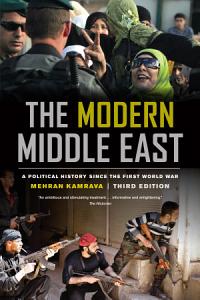
In The Modern Middle East: A Political History Since the First World War (University of California Press, 2005), Professor Mehran Kamrava offers a thorough and engaging political history of the modern Middle East. Extremely well-researched and erudite yet at the same time written in clear language for a general readership, The Modern Middle East covers the twentieth-century history of Middle Eastern countries, as they grapple with the forces of modernization, colonization and gaining independence. It also analyzes the ever-growing, and sometimes ominous, tensions between those who support a lay state and growing religious fundamentalism as well between those who support more democratic regimes and autocratic rulers. This book remains extremely relevant to current events. Although published in 2005, The Modern Middle East explores tensions that help us better understand the Arab spring uprisings of 2011 and the emergence of ISIS and other extremist groups in the power vacuums created by political upheavals. Last but not least, Kamrava offers one of the most fair and balanced analysis of the on-going tension between the Israelis and the Palestinians that I have read. I think this book should be required reading for every college course on the Middle East.
Bio:
Mehran Kamrava is Professor and Director of the Center for International and Regional Studies at Georgetown University’s School of Foreign Service in Qatar. He is the author of a number of books, including, most recently, Iran’s Intellectual Revolution and Qatar: Small State, Big Politics. His edited books include The International Politics of the Persian Gulf, Innovation in Islam: Traditions and Contributions, The Political Economy of the Persian Gulf and The Nuclear Question in the Middle East.


