 Claudia Moscovici
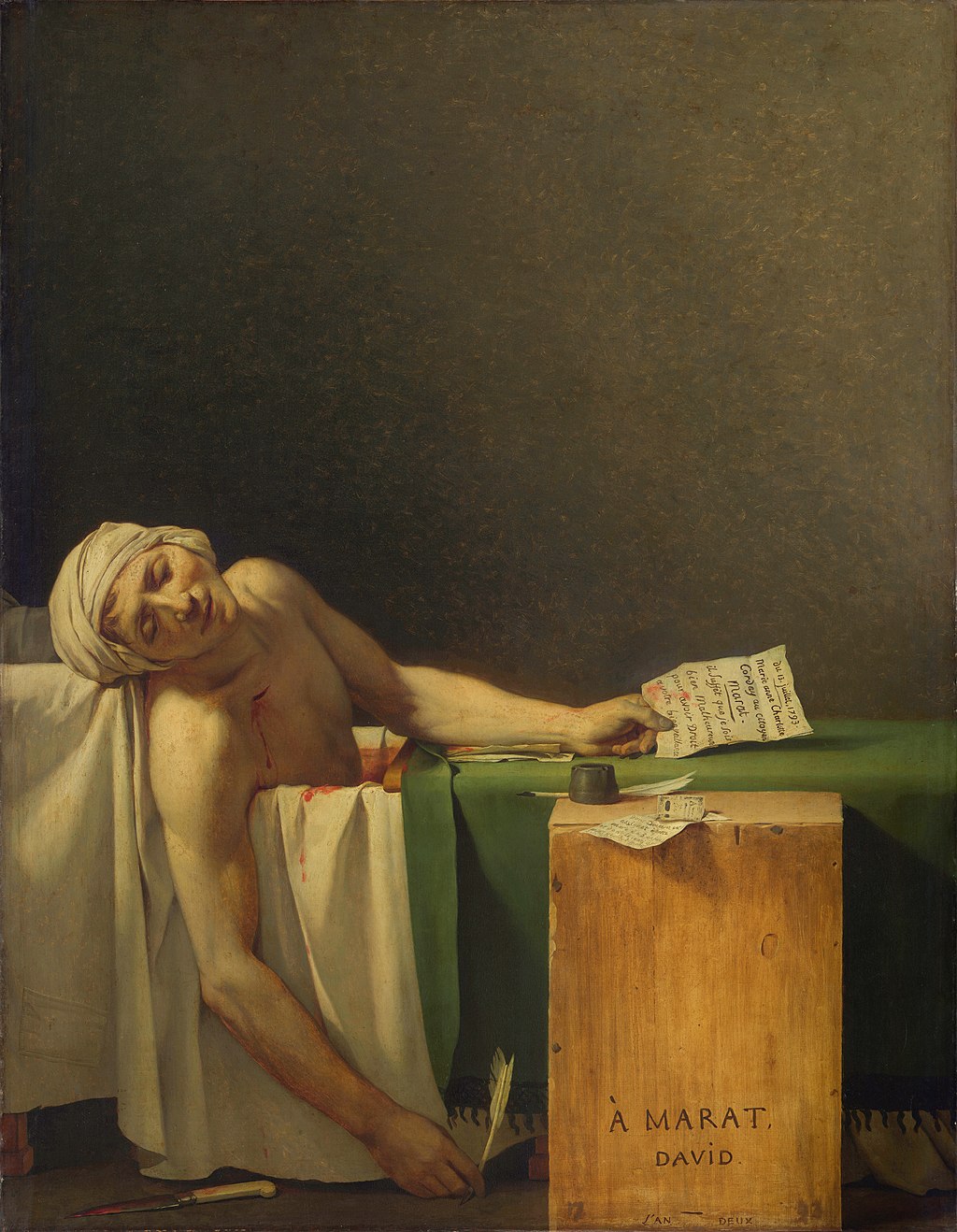
E.H. Gombrich declared in his monumental history of art, The Story of Art, that “There really is no such thing as Art. There are only artists”(15). By this he meant that art has no timeless standards of value or beauty; there is no essence that encompasses that which different periods and cultures call artistic. Rather than trying to capture the essence of art, Gombrich focuses instead on the particularity of artistic movements and the accomplishments of individual artists. Hafftka, I believe, is one of the contemporary artists whose legacy will last. His series of portraits usually depict fellow artists working in different fields. They represent a kind of solidarity among the arts as well as feelings of friendship for the accomplished individuals he depicts. They also evoke the now dying tradition of “immortalizing” consecrated writers, musicians and artists. In this sense, Michael Hafftka belongs in a rich and longstanding yet constantly changing tradition of portrait painters.
One of the main functions of art, particularly of the (changing) art of portraiture, was to “immortalize” or, more modestly put, preserve the memory of the person depicted. This tradition dates back to the Egyptians, for whom, however, art had a sacred rather than secular meaning. Simply put, Egyptian artists sought to immortalize the pharaos.
Tombs, busts and paintings were used as a means of preserving and glorifying the souls of kings, queens and other privileged members of society. E.H. Gombrich tells us that, appropriately enough, one Egyptian word for sculptor was “He-who-keeps-alive.” Egyptian artists depicted the human figure not as they saw it, nor to express or provoke emotion, but to capture the essence of an important person’s spirit for the afterlife by representing his or her body from its most characteristic angles. The face was shown in profile; the eye from the front; the shoulders and chest from the front; the legs from the side, with the feet seen from the inside and toes pointed upward. (The Story of Art, 60-1). For millennia Egyptian figures had a frozen and immobile, non-expressive look that strove to freeze the souls of powerful men and women in time and to safeguard their happiness in the afterlife.
During the Renaissance, artists were often hired by rich and powerful patrons, among which the most important (in Italy) were members of the Medici family, to represent them in a way that expressed their political prestige and left an enduring cultural legacy. Next to having children, art has always been regarded as one of the most important ways to leave a trace of oneself for future generations. Artists themselves often prioritized this means of “reproduction”. As the fourteenth-century artist Giotto di Bondone is said to have replied, partly in jest, when someone asked him why his paintings are so beautiful and his children so ugly, “I paint by daylight but reproduce by the darkness of night.” Nothing immortalizes an individual’s status and power as much as art does Napoleon Bonaparte realized the political and cultural importance of portraiture. He commissioned France’s leading artists of the Neoclassical period–Jacques-Louis David and Jean-Auguste-Dominique Ingres–to evoke the glory of ancient Rome in order to symbolize his power as Emperor. In the portrait “Napoleon I on his Imperial Throne” (1806), Ingres represents Napoleon with scepter and staff, reigning supreme, in all of his imperial glory.
A few decades later, the Impressionists changed what would be regarded as acceptable subjects for portraiture, a genre formerly reserved mostly to royalty and the aristocracy. Depicting the middle and upper middle classes became a favorite theme for new generations of artists. One of the greatest portrait painters of the nineteenth century, John Singer Sargent, depicted his wealthy patrons, particularly women, in portraits that conveyed their social status, beauty and grace. “Consider the word ‘portrait,’ the critic and philosopher Arthur Danto invites us. “Narrower in its reference than the word ‘picture,’ in the sense that something can be a picture of a generalized woman or tree or apple without representing any specific woman… a portrait is a picture of a particular individual… But portraiture must have involved an even more mysterious achievement, the drawing forth, as it were, of the inner self or soul… Sargent’s personages are, in Lucy Flint’s words, ‘all face and fashion,’ shown as they appear or wanted to appear, as if they had stood before a mirror in which they composed their features, put on their best face, arranged their garments to suit themselves’.” (Arthur Danto, The Nation, February 7, 1987)
Even Warhol’s pop art, while undermining the whole notion of a stable identity in its infinitely reproducible images, nonetheless immortalizes the “celebrity” status of cultural icons such as Marilyn Monroe and Elvis Presley. Michael Hafftka’s portraits of poets, musicians and writers not only offer an homage to the individuals he paints, but also reveal a collaboration among different artistic fields and constitute a celebration of the arts in general.


