 Claudia Moscovici
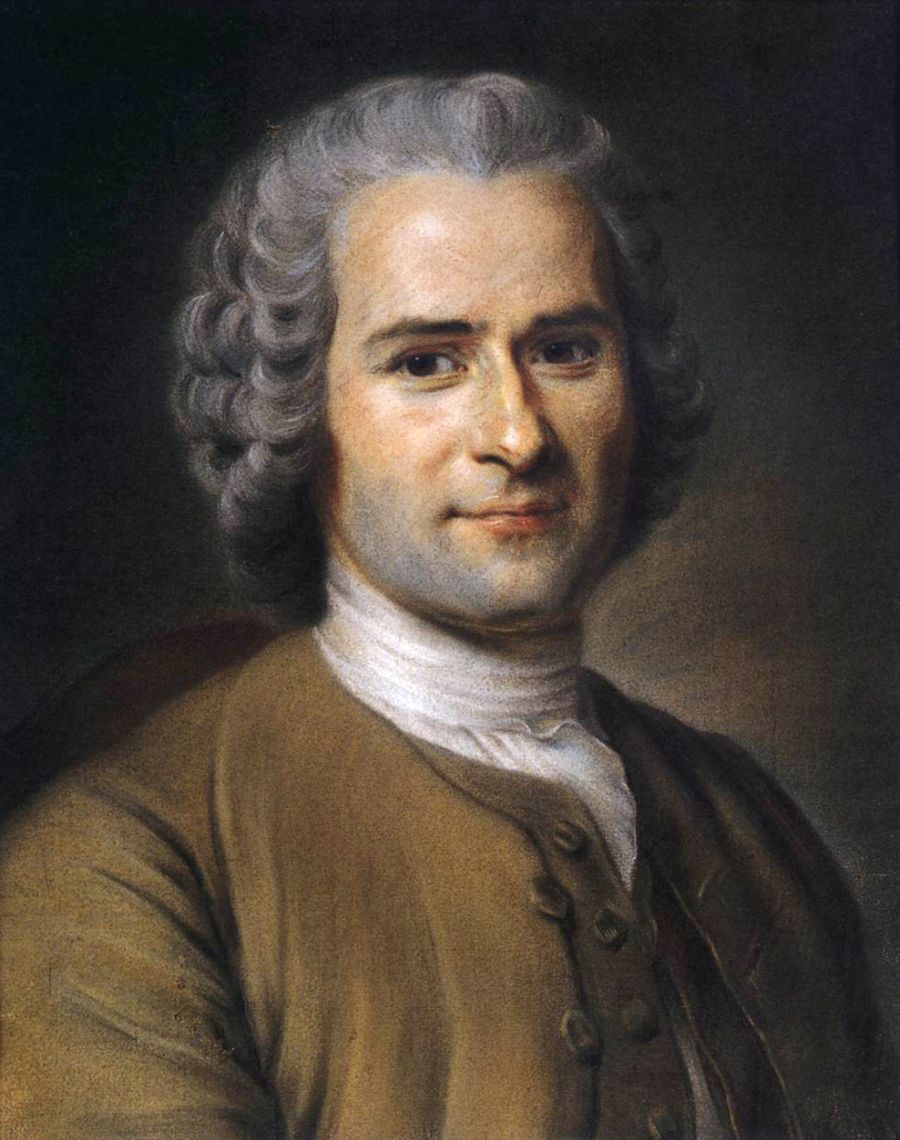
Jean-Jacques Rousseau (1712-78), considered along with Goethe to be one of the fathers of Romanticism, can rightfully claim paternity to many other important concepts and movements in Western culture, including an arguably democratic version of the social contract and the republican model of citizenship. Yet it is his nuanced, early Romantic description of human passion in his novel La Nouvelle Héloïse (1761) that constitutes Rousseau’s most lasting cultural legacy. In saying this, I don’t mean to sell short his political and philosophical writings. Indeed, the Discours sur l’origine et les fondements de l’inégalité parmi les hommes (1755), Du contrat social (1762) and Emile (1762) have also stood the test of time. They’re important not only from a historical perspective—since they influenced the formation of democratic citizenship and the views on the education of children and on complementary gender roles—but also from a contemporary one, since they continue to help us think about the social foundations of modern democracies.
The two kinds of writings—the fiction and the essays in social philosophy—are, in fact, related. Both are guided by Rousseau’s understanding of natural passion. In his first philosophical essay, the Discours sur les sciences et les arts, which won the prize of the Académie de Dijon and created quite a stir upon its publication in 1751, Rousseau criticized French civilization rather harshly. To the question “Has the progress of sciences and arts contributed to corrupt of purify morality?”, contrary to expectations, the author answered with a resounding no. Believing that the possibilities of advanced education and material wealth corrupt our better instincts, Rousseau denounced civilization. He pursued this argument in even greater depth in his analysis of the origins of human inequality, where he described the manner in which civilization, particularly aristocratic culture, perverts human nature and leads to unjust and exploitative forms of social inequality.
Although Rousseau’s arguments are intricate and complex, his model of human nature and its passions is surprisingly simple and vague. In his philosophical essays, Rousseau tends to take human nature for granted and shape it instrumentally according to the kind of argument he wishes to make about the social foundations of government. It’s therefore not surprising that critics have frequently charged him with (or celebrated him for, as the case may be) being contradictory. When he wishes to criticize contemporary understandings of progress in the Discours sur les sciences et les arts, Rousseau describes human nature as essentially good and civilization as a corrupting influence. In the Discours sur l’origine et les fondements de l’inégalité parmi les hommes (1755), however, Rousseau’s statements about civilization are more ambivalent, and consequently so are his descriptions of human nature.
Rousseau traces the evolution of civilization toward a good society and form of government—represented by the democratic cantons of his native Geneva—as well as its devolution toward a bad and unjust society, represented by aristocratic France. Human nature, he declares in the Discours, is neither good nor bad, but malleable: we’re molded by the kinds of social institutions we create. Which is why the author insists that it is all the more important to implement the right social institutions that educate the young to become good citizens and the right kind of governments endorsed by the people. What emerges from Rousseau’s philosophical writings is a set of statements about human nature—as good, bad, or ambivalent—that are formulated as value judgments. The question of what this good, bad or ambivalent human nature really is remains tantalizingly open in Rousseau’s philosophical essays. For a value judgment is not in itself a description of something, but a statement about its desirability of something—in this case, about the desirability of passion.
It is primarily in his epistolary novel, La Nouvelle Héloïse, that Rousseau offers a compelling and detailed description of human nature and of the passions that move us. Although the plot of La Nouvelle Héloïse might lead us to believe that Rousseau’s solution is to renounce and even destroy passion by separating the lovers and sacrificing the woman who inspired such feelings, fortunately for the future of Romanticism, La Nouvelle Héloïse does not limit itself to a moralizing lesson on love. The novel captures the nuances, temptations, tensions, problems and compensations of human passion, tying it to reasoning, knowledge, social and moral assumptions as well as to other emotions such as jealousy, possessiveness and—Rousseau’s favorite—sympathy. La Nouvelle Héloïse places passion at the center of human existence, initiating, along with other similar works, the movement that would later be called Romanticism.


