 Claudia Moscovici
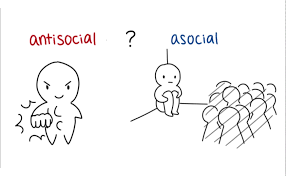
If lying about who they are and what they plan to do with their lives were their only crime, psychopaths wouldn’t be quite so dangerous. Unfortunately, their lies often serve far worse objectives. In this section, I’ll rely upon Cleckley’s work to discuss the psychopath’s antisocial behavior. One of the main symptoms of psychopathy is a lack of remorse and shame for immoral and harmful behavior: “The psychopath apparently cannot accept substantial blame for the various misfortunes which befall him and which he brings down upon others, usually he denies emphatically all responsibility and directly accuses others as responsible, but often he will go through an idle ritual of saying that much of his trouble is his own fault” (344). For instance, if you catch a psychopath cheating, he may say that he knows he’s in the wrong, claim that he didn’t love the other woman and promise you that he’ll never do it again. You can bet that the only true part of his statements is that he didn’t love the other woman. Every other excuse the psychopath offers and every promise he makes, you can safely delete since they’re false. As Neil Entwistle’s behavior in court revealed, psychopaths believe that if they duped, cheated on, scammed, raped or even killed other individuals, it’s because the victims somehow provoked it or got in their way. Cleckley concludes, “Whether judged in the light of his conduct, of his attitude, or of material elicited in psychiatric examination, he shows almost no sense of shame. His career is always full of exploits, any one of which would wither even the more callous representatives of the ordinary man. Yet he does not, despite his able protestations, show the slightest evidence of major humiliation or regret” (344).
In his own mind, nothing the psychopath does is ever wrong. “Not only is the psychopath undependable, but also in more active ways he cheats, deserts, annoys, brawls, fails, and lies without any apparent compunction. He will commit theft, forgery, adultery, fraud, and other deeds for astonishingly small stakes and under much greater risks of being discovered than will the ordinary scoundrel” (343). Often, there seems to be no underlying logic to a psychopath’s actions except for causing harm for its own sake. Scott Peterson could have divorced Laci. He didn’t have to kill her and their unborn child. Mark Hacking could have explained to Lori that he wanted to appear more educated and accomplished than he actually was. He didn’t have to kill her just because she no longer mirrored the idealized image of himself he wanted to see reflected in her eyes. Neil Entwistle could have told Rachel that he wanted a more exciting sex life with other women. He didn’t have to kill her and their newborn baby in order to regain his bachelor freedom. In geometry they say that the shortest route between two points is a straight line. Psychopaths don’t toe a straight line in life. They choose instead deviant routes even when those paths lead them straight to jail. Which is precisely the point Cleckley addresses next.
Poor Judgment and Failure to Learn by Experience
Just because psychopaths are theoretically capable of moral reasoning doesn’t mean that they actually exercise it when it comes to their own lives. Like practically everything else about the psychopath’s seemingly “normal” behavior, offering rational arguments is only a rhetorical strategy to them. They use it to impress others with their wisdom and common sense. Cleckley indicates, “Despite his excellent rational powers, the psychopath continues to show the most execrable judgment about attaining what one might presume to be his ends. He throws away excellent opportunities to make money, to achieve a rapprochement with his wife, to be dismissed from the hospital, or to gain other ends that he has sometimes spent considerable effort toward gaining” (345). The pursuit of a given goal excites a psychopath far more than its actual attainment. A psychopath wants to seduce a woman, not be her partner. He wants to get a job, not succeed in it. He wants to mark his women by having babies with them, not raise happy and well-adjusted children together. Unfortunately, even negative consequences, such as losing their partners or ending up in jail for his crimes, don’t change a psychopath’s pattern of destructive behavior. “This exercise of execrable judgment is not particularly modified by experience, however chastening his experiences may be,” Cleckley observes (345). A psychopath regards as abstract and theoretical anything that’s not closely related to his short-term pursuits, whims and pleasures. For him, immediate rewards far outweigh potential future costs. Moreover, in his own mind, the rules apply only to others, not to him. As Cleckley frames the problem, “He can offer wise decisions not only for others in life situations but also for himself so long as he is asked what he would do (or should do, or is going to do). When the test of action comes to him we soon find ample evidence of his deficiency” (346).
Dangerous Liaisons/Legături Periculoase, Editura Vremea, http://www.edituravremea.ro/leg–turi-periculoase–cum-s–recuno–ti-un-psihopat–i-s–scapi-din-mrejele-lui


