
 Claudia Moscovici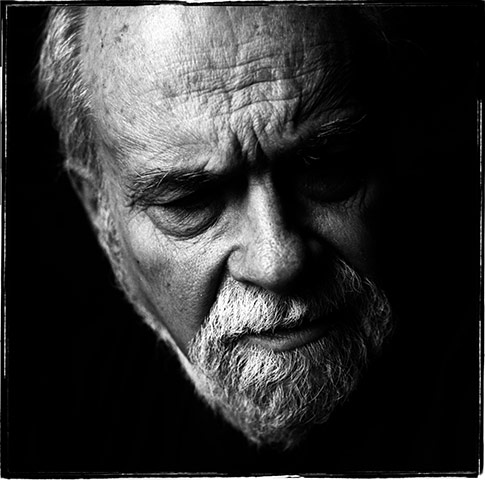
Arthur Danto and “Encounters and Reflections: Art in the Historical Present”
Arthur Danto has a unique background that prepares him equally well to be both philosopher (of art and aesthetics) and art critic/historian. He thrives in both fields, which are not only close, but also complementary. The field of aesthetics explains the underlying structure of art: what is art; how is it created; what is an artist; how does art reach an audience; what are the relationships between art and other fields, like sociology, religion, psychology and life in general. Art history touches upon all of these questions, since the works of every artist are, simultaneously, a creative process, a form of knowledge, an expression, and a contribution to society (even if for some, like the Dada movement, it’s just to negate meaning, “high art” and knowledge).
Like Gombrich, Danto expresses his ideas and theories equally well for both a large mainstream audience and for a small group of specialists in art and aesthetics. From 1984 to 2009, Danto was the art critic for The Nation. For many years, he also taught philosophy at Columbia University, where he is now Johnsonian Professor Emeritus in Philosophy. He’s known as one of the most effective and earliest proponents of postmodern art. In fact, he introduced Andy Warhol to the general public before he was (in)famous.
In most of his theoretical work, Danto explains the rise of conceptual art. His artistic heroes are Marcel Duchamp and Andy Warhol, who arguably contributed most to make art what it is today: aesthetic in the critical and reflexive ideas it raises about art, not in the way it represents objects. Duchamp’s urinal and Warhol’s brillo boxes, Danto argues, are not artistic in their materiality. There’s nothing intrinsic to these objects that makes them different from ordinary household objects. Their aesthetic qualities, Danto suggests, lie in the way their make us question the nature and existence of art in a radically new and provocative way.
The millennia-old Platonic tradition of understanding art as some kind of inferior mimesis or imitation of reality is clearly gone in such ready-made objects and pop assemblages. Gone is also the equally old tradition, famously initiated by Plato and resurrected by the Romantics and even by Gautier, of art as a special, almost daemonic, inspiration that leads to the creation of beauty. Last but not least, in reading Danto we get the impression that the notion of creativity and originality, so vehemently defended by Emile Zola, remains in artists such as Duchamp and Warhol, but is hard to match after them.
Once originality is pushed so far as to eliminate the intrinsic qualities and extrinsic social functions of art, what’s left of aesthetics? Does art even continue to exist as a separate domain of creativity? Even Danto, the philosophical defender of pop art before it became popular, is not optimistic about the future of art. In After the End of Art (Princeton, Princeton University Press, 1998), Danto sees no innovation possible after the destruction of the aesthetic object. Tracing the path to this destruction and seeing if it can be, in some ways, reversed or pushed beyond the current impasse hence presents a real challenge.
As is the case with Gombrich, Danto’s writing is most effective—and moving—in his art criticism. Encounters and Reflections: Art in the Historical (Berkeley, University of California Press, 1997) contains many of his vivid art reviews published in The Nation between the years 1986 and 1990. In these essays, the aesthetic philosopher takes a back seat to the art historian. Danto reveals the wonders of the greatest artists in the history of art, from old-time favorites such as Van Gogh and Klimt, to relative newcomers—and two of his personal favorites–Warhol and Mapplethorpe. Accessible, clearly written, poetic in style, and reflecting not only a deep appreciation of art history but also a genuine love of art, Gombrich’s The Story of Art and Danto’s Encounters and Reflections continue to enlighten countless readers and set the highest standards for expository writing in the arts and humanities.


